

Capitalism = Competition
When Money Takes More Than It Gives (Namely, Creativity and Purpose)


Having been self-employed for almost three years now, I have slowly but surely come to realize a very simple truth: capitalism is about competition. I know this sounds super banal, and perhaps obvious or naive to many, but to me, it isn’t. I am not an exceptionally competitive and greedy person. My mother always told me that whenever my older sister and I had an argument as children, I was the one who backed down, prioritizing harmony over whatever I had originally been arguing for.
Contrary to this basic aspect of my character, I am, for some strange reason, very good at a game called Bohnanza. It is about harvesting different types of beans and collecting as many as possible before cashing them in at exactly the right moment (each bean has a different ideal harvesting point depending on its value and the total number of cards in the game) to achieve the highest return. To succeed, you need a mixture of luck and negotiation skills. Personally, I trust my gut when playing Bohnanza. I don’t count cards, and I don’t fight to the death with my fellow players—although I do argue with and try to influence them when I can. Surprisingly often, this technique leads me to win the game.
Winning the Game, Losing in Real Life?
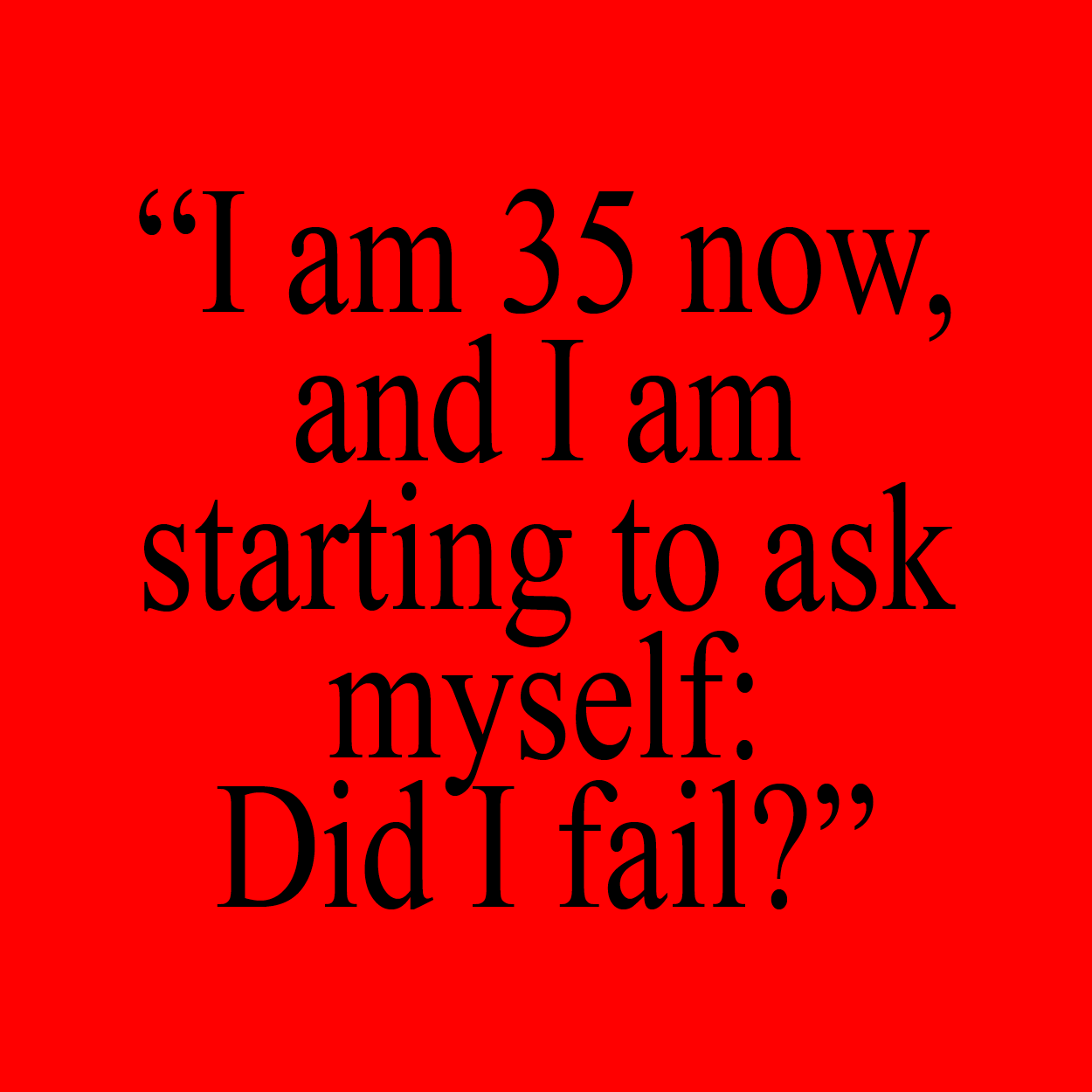
In the real world, however, I don’t always feel like a winner, at least in terms of coins. So far, I have never had a job that paid me really well. My earnings have always been okayish, but if I didn’t come from a (comparatively wealthy) middle class family, I would have had to structure my entire career differently. I have no real retirement savings, and I don’t own any real estate. I am 35 now, and I am starting to ask myself: Did I fail?
From the outside, this might seem crazy. I have what, especially in design, could certainly be called a successful career. I have accomplished things I would never have dreamed of, such as traveling the world, meeting famous designers and amazing creatives, and founding three companies. But if all of this isn’t crowned by a substantial financial income, it can still feel more like a hobby.
A natural result of this precarious situation is that I have started questioning my capitalist hunger. Should I negotiate more aggressively for better fees? Should I have sold the shares in my first company for more? And so on.
After all, it is merely a simple decision I can either make or not make. My character lacks killer instinct. There, I said it. I am not like one of those characters from the TV series Suits who would do anything for personal gain.
Am I Too Empathetic for Capitalism?
While Elon Musk and Peter Thiel would probably pity this “weakness” in my character, I think it is something I should cherish and love—today more than ever. Yes, it is this aspect of my character that leads to constant financial struggle in a capitalist world. But it is also what helps me develop new ideas that aren’t based on money, but on purpose. Founding a critical design magazine is an idealistic project. Founding a nonprofit biennial is idealistic. I simply love working with people, thinking with them, and creating things together—not driven by profit, but by collaboration and purpose. I don’t want to limit my creativity to ideas that are potentially profitable.
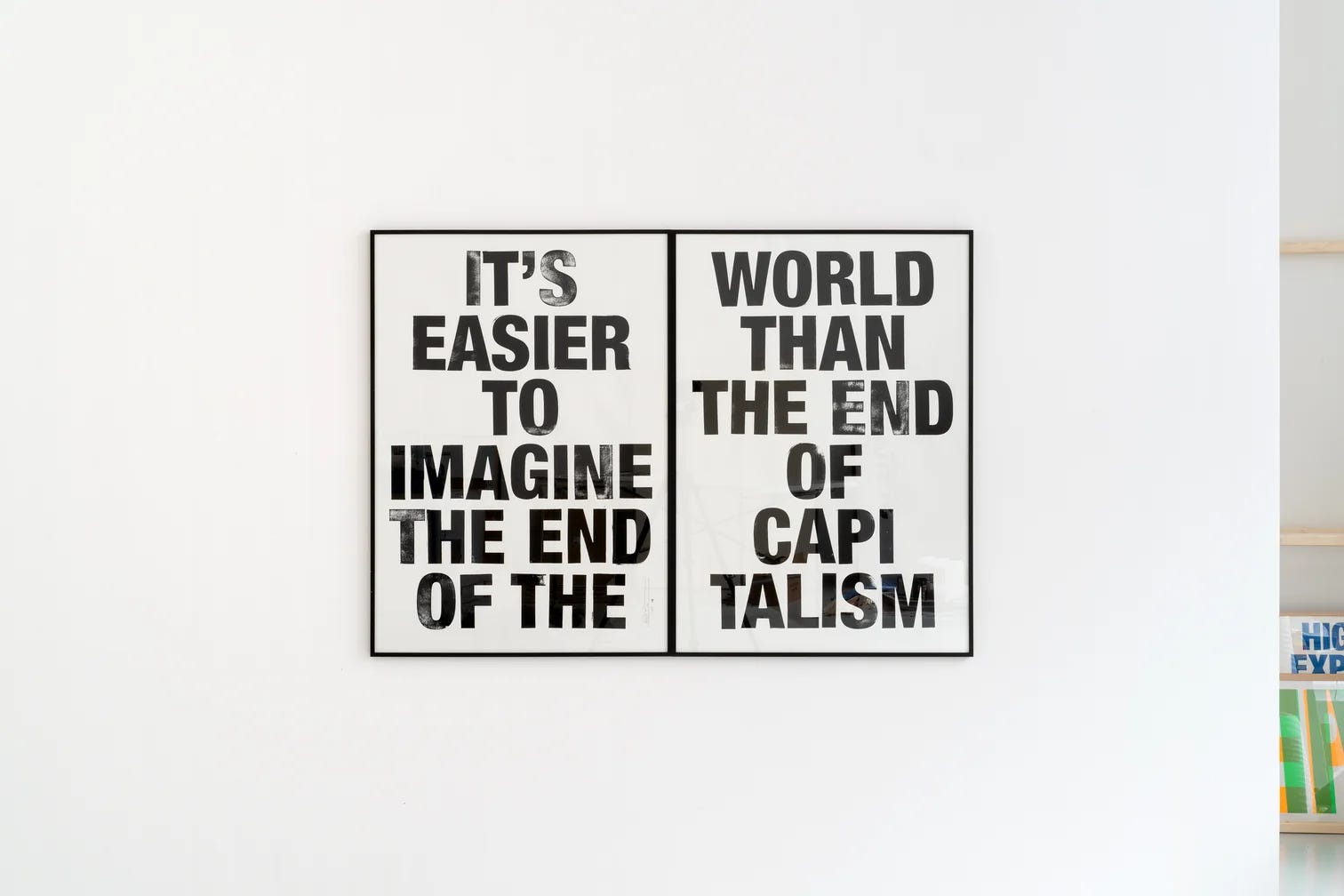
There is a saying: “It is easier to imagine the end of the world than the end of capitalism.” I think it might be true. Capitalism is, on the one hand, deeply exploitative, of all kinds of resources, whether those of the planet or those of our bodies and minds. On the other hand, it serves our apparently deep human desire to own and possess more and more goods.
And because capitalism keeps us so busy maintaining every bit of property we have worked so hard for, there is no time or space to imagine alternatives. Also, humans tend not to give up on deeply held belief systems that they have come to accept as truths. We can learn, but we don’t like being wrong either. So maybe we need an external imaginative force?
Yearning for Alternatives—Or Is AI Good for Anything?
In 2018, my mother gave me the book Life 3.0 by the researcher Max Tegmark. It is a substantial volume filled with basic questions and ideas about artificial intelligence: What is learning? What is knowledge? What is creativity? And so on. Tegmark also outlines several scenarios for what might happen once AI becomes part of everyday human life, which is now the case.
One of the more optimistic scenarios, as far as I remember, presents AI as a kind of benevolent dictator. In this scenario, AI becomes more and more powerful while remaining benevolent toward the human race. So instead of making us extinct, AI slowly but steadily, and without us noticing (I think this is crucial), helps us become better versions of ourselves. It does so through major structural interventions, but also through small, local and individual ones, helping every human become a loving, kind, and caring person while ensuring that everyone’s basic needs are met. These “solutions” for us humans are hard to imagine, but the AI (in the scenario) sees them clearly and free from emotional attachments, hence can dictate them.
Today, to be very frank, I don’t really see this future dawning. AI isn’t more creative than we are, it is built on the data we feed it. Naturally, it is being used to accelerate what is already there: the monopolization of power through wealth, rather than creating something genuinely new. But I’m trying to remain optimistic, and I kind of like the idea that humanity might simply be too frightened to face the changes it desperately needs—and therefore has to rely on machine intelligence instead. How about this prompt, for example?
Give me a step-by-step guide to slowly transforming the human race into a kinder, more generous, less self-destructive and exploitative species. Start by imagining alternatives to capitalism.
Winning Only Matters If You Can Share It
Winning Bohnanza is fun. But what’s even more fun to me is playing it with my friends. What’s the point of having coins if there’s no one around to share them with? What does money stand for if you had to treat everyone around so badly that they don’t want to have anything to do with you anymore after you profited from them? I’m becoming a little kitschy here, but yes: Money can’t buy you love. And I’m not ready to sacrifice my yearning for purpose in exchange for capital. In a capitalist world, this is often framed as weakness. I think that framing is a fallacy, a narrative we have come to depend on in order to sustain capitalism.
A while ago, I saw a Reel in which someone said that doing nothing is the most radical thing you can do under capitalism. I couldn’t agree more and would only add one thing: doing nothing and earning nothing.
Successful greetings
Anton
Further Readings
Speaking of money and success: Currently all EU citizens are able to vote for their favorite new EURO Bill design. The devil is in the detail.
Check out our latest post on the enduring human fascination with stones—this time as an aesthetic device.
Have a look at our Reader Positions on Freedom: Design and Its Boundaries, available at the thing Gallery.
🫶🏻💪🏻 keep chasing it
A real question everyone should ask themselves, why do I make my life a competition? Shouldn't my life be about "my" life?